by ChrisD | Sep 7, 2015 | Blog Posts, Chris's Blog
Words Spoken Over Us
In the early nineties, after working for an art school, I was given an art class of four students in Atlanta. Margaret Hutchison, one of my first art students ever, was in this class. After the first or second day of art class Margaret said to me,
“I’m not sure I’m getting this, should I continue?”
Earlier that morning the director of the art program had notified me that if I lost any art students I would have to take a cut in pay. Even though it was my first day and I was taking over for a different art teacher, I was about to go from $45 for three hours to $30 and Margaret Hutchison who had never had art before said that sentence.. “I’m not sure I’m getting this, should I continue?”
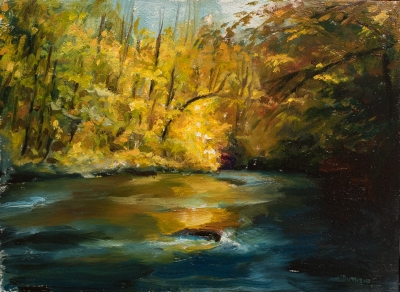
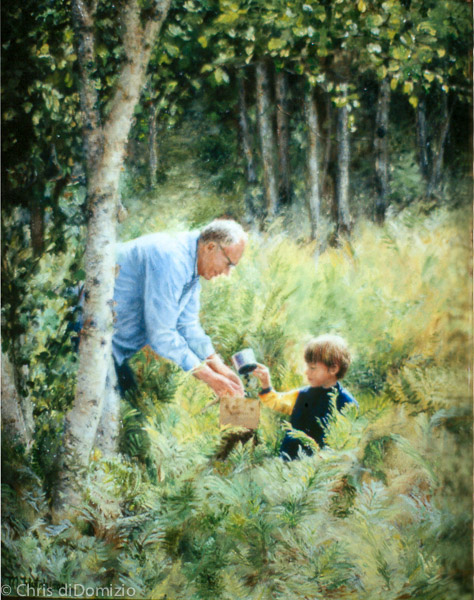
I’m hoping I said YES to her because I believed she could succeed… Margaret is truly a wonderful person and artist, as demonstrated by her art work
Margert Hutchison Oil
I once had an art teacher in college tell me “to stick with photography you are a better photographer than artist”.
I’m so glad I did not listen to her, but it wasn’t until late 2014, almost 30 years later, that I realized I had believed those words spoken over me, that I was a better photographer than an artist. But one day, while working in Adobe Lightroom, using the photographic tools to convey my message, I realized I was thinking like an artist. I was making decisions using photographic tools used by an artist to convey an artistic message. And it was my message.
At that moment I realized that I AM an Artist first and photographer second.
Sometimes we have words spoken over us that somehow continue to falsely guide our lives, keeping us from stepping into our destiny. I believe art is about equipping the artist with the tools to communicate a message, your unique message.
What comes against our desire to do art?
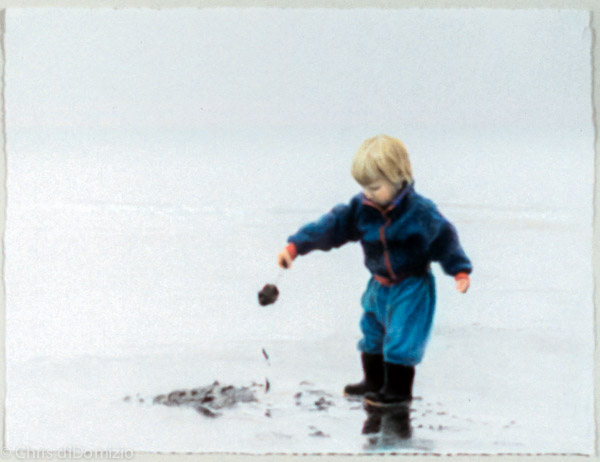
margaret hutchison pastel
Just for argument sake: When your art work starts to get difficult, or a little confusing, I wonder if you hear those feelings or thoughts from the past?
Voices from the past, that you cannot do this… I wonder if not someone else’s voice over us but maybe our own voice? Voices from the past sometimes defeat us.
Plein Air painting is great example of how frustration and discouragement can come against us. Too often, within the first 30 minutes of being outside painting, I am ready to quit but as I have realized to just keep working through the painting and the difficulties disappear and I start to enjoy the day outside painting.
Is it possible that others do or have had these things said to them?

Margeret Hutchison
I formed logic from the undeveloped brain of a 5-year-old (frontal lobe of logic is not fully developed until the mid-twenties) from things that happened and were said to me. I am so loved by my folks and they were so easy to please.
They loved everything I did. My mom had a Christmas wreath I made in second grade where I glued elbow macaroni and spray painted it gold.
But I said to myself, “ If you like what I just did, wait till you see the next thing that I do” and that 5 -year-old started this “measuring up-perfectionism” without anyone knowing what was going on in that undeveloped brain.
About six years ago before I started to oil paint again (see my story in my Blog “How To Enjoy The Day Painting”) Margeret returned to the art school and I had shared with her that I realized what John S. Sargent may have done in his oil paintings and I could explain it through the artist story. After explaining this I asked Margaret to draw this image from Haiti for our Haiti fund raiser through y wife’s 501c3 called Art With a Mission Atlanta (AWAM ATLANTA) because I always loved this image and I would help her and explain the steps. Margeret is the only one I trusted to draw this image, yet it is interesting that I gave my best image to someone else to do. Was I was too afraid to do it myself?
In my mind I was not good enough?
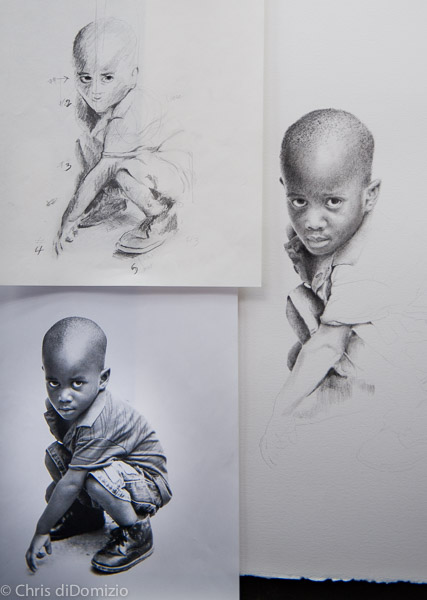
Margeret Hutchison Graphite
So I asked a student to do it for me, for the children in Haiti.
Margaret is an amazing woman, a wonderful artist, and one of the most talented artists I have ever had the privilege to teach. What if someone did not stand in for Margaret and believe in her?
What is the sentence that you might say or hear? Where did a belief start? Isn’t it time to step out of that shadow and step into your desires through art?
…Or speak life into someone else who cannot speak it into his own life?
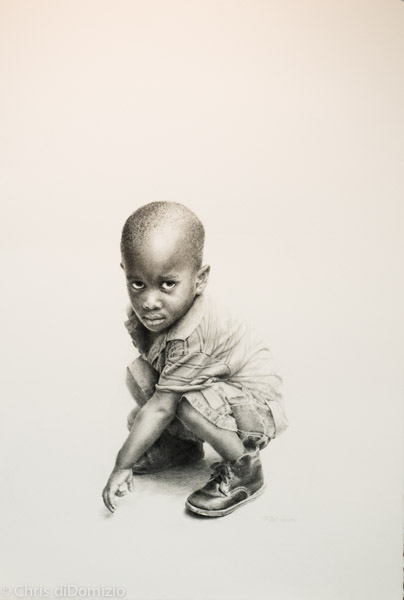
Margeret Hutchison Graphite
I wish I had more of Margeret’s beautiful art work to show the world, she was in the art class before I realized as an art school the need to advertise, our art program has always had between 150 and 200 students and it has been by word of mouth.
Is it time for you to step into your desirer and maybe to speak into someone else’s desire?
thank you, Chris diDomizio
p.s. interesting that I asked her to draw it and that I had held in reservation the opportunity to paint this image.
by ChrisD | Sep 6, 2015 | Blog Posts, Chris's Blog
I saw something about myself when I told the art class that I was going to do a painting after a twenty year break. I was stepping out and it was time to return to portrait painting. After gathering my thoughts and sketches and setting up the three cameras to film this video for our online art classes, I began!
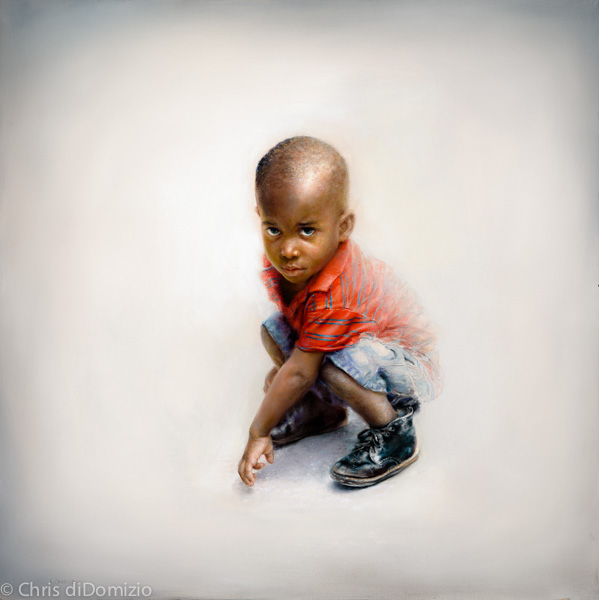
My wife has a 501c3 nonprofit called Art With a Mission Atlanta which aids students from an orphanage in Haiti to go to college. The artist in our Art School help raise funds to support this project. The image I am using is a little boy named Kiki. He has known so much heartache in his young life.
When I started this painting I did not understand why I was attracted to this image, but I was. With over 300,000 Mission’s Photographs from all over the world I chose this one. I knew I wanted to connect to the viewer through his eyes. His apprehension is obvious, yet somewhere inside of him is a desire to ask for help. His arm is closing us out. He would have to make the first step; hence the title “Step of Faith” by Chris di Domizio
As I teach the artist in our painting classes, start the painting where you wanted the viewer to connect with first, in this case it is the eyes. Then I chose the places for the viewer to look based on KiKi’s story, not wanting any texture from brush strokes which would add confusion to the viewer and to remove all confusion around him meant to remove all the texture. The surrounding white background represented God’s presence of purity and incense bathing him, regardless of his actions and the actions of others against him.
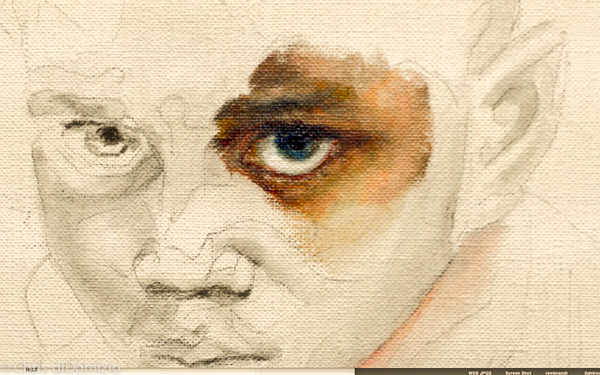
Close Up of Step Of Faith by Chris diDomizio, please forgive the flesh tone colors from an unedited video clip
Wanting this stillness to evoke a connection between “ just us”.
Having the eyes become the most important place in the painting without the use of two very powerful visual tools (color and contrast). Most of the teaching in our art program from the drawing classes and the painting classes almost solely focus on Color and Contrast and now I was about to leave them out of most important part of my first painting back in twenty years. I choose to leave out the color in the eyes because the color could have changed the message from hardship to something else. On the other hand I knew my job of getting you to look at the eyes would be easier with the addition of color to the eyes by adding visual weight to that area.
The next choice I was given was adding a highlight to the eyes. This is an easy way to bring attention to this area by adding contrast but it also can add different psychological aspects to an eye. I once heard that a high light to the eyes could give the person hope and alertness. My message was that life has been hard and there has been hurt in this little person’s life afraid tom have hope. So the two most powerful art tools I could use were off the table. The art tools our entire art school is built on and at the most important place of the painting. But I also teach that these “art tools” are not rules just tools for the artist to choose when to use and not to use.
As I finished the eyes I started painting the forhead, but this part of the face was to represent the harshness of his experiences. Keeping the “pretty” color of the flesh tones to a minimum using the greyed colors to evoke this message of harshness. Knowing I needed gray color, I subconsciously loaded my brush with bright orange – red flesh tones as bright as the scarlet red shirt.
There I was in front of three cameras and I needed grey and I grabbed bright orange – red, Boom! Mistake. It took minutes to remove the scarlet red and make it gray.
Starting again I reloaded because I needed gray for the message and Boom, I loaded bright red.
Like Smeagol and Gollum in Lord of the Rings, with a multiple personality, I verbally said to myself “what are you doing? I answered… I don’t know. What do you mean you don’t know…

You know to make the painting about contrast and not color and that putting the grey first will keep the color calmed down. I answered… I know” and at that moment I realized that my precious ego is more important than my message.
As this battle in my mind continued I realized that I had to put the color first to make the forehead come forward, but the painting was about contrast and not color and then I said to myself ”it’s more important to show off what I can do and make it realistic than to communicate a message.”
 The entire first day all I did was worry about the camera watching every stroke. Portrait painters will know when you get the color off or mess up on the drawing and Gollum had a field day with.
Welcome back painting! Are we having fun yet?
The next day I realized what had happened. I was so worried what others were going to think that I lost my painting’s message of connecting. As I started to paint on day two, but this time it was about connecting my message, one stroke at a time. I had a great day.
Ironically, on the first day of painting for the instructional video I rarely spoke, all the talking in my head was to Gollum. Imagine a portrait training video with no words! (I will voice over the mistakes and have commentary like a tennis match, with the good and bad strokes, and why)
The second day I had a great day explaining the purpose of each stroke, and that each stroke went in with the right color, temperature, intensity, and texture. Everything I was trained to do was going into the painting.
I’d like to say day three was a good one but unfortunately it was a silent film and all the chatter and arguing was with Gollum. Imagine an instructional video without instruction!
Day four was a great day, explaining the purpose and execution of a message! Here is what I have learned:
The days I paint for just me, connecting my message with my plan, placing each stroke with a place and a purpose, that’s the day I enjoy painting.
Chris diDomizio the return to painting twenty years later. Painting is fun and I enjoy the process of learning about myself with each stroke.
The title “Step of faith” was for me, it was up to me to “step into my calling in art” to trust in Him who has equipped me to be an artist. To be the Artist that I am today, not the artist I will one day become. I’m just to work on who I am today, One Step of Faith at a Time”.
by ChrisD | Jul 7, 2015 | Blog Posts, Chris's Blog
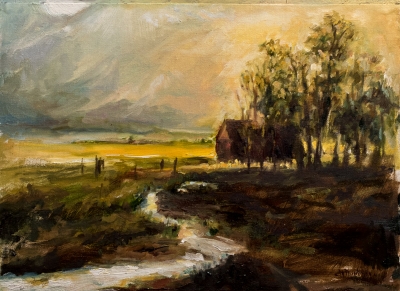
My list is from someone who wishes to enjoy the day and not have it be WORK. My goal is to use this time to refine my drawing skills by applying the 19c.French Academy’s dot to dot – in our art program in the art classes and in the painting classes we call ” Touch-Point-Drawing concepts of site drawing. As our goal in all of our art classes we are to refine our seeing and drawing of shapes both positive and negative shapes. To take the classroom art school exercises and to use them in the ousted classroom To look for figure ground relationships, To capture the Essence of my senses are experiencing. To look beyond any preconceived ideas of what to paint and allow a soaking in to experience the moment. To refine and map out a my storyline based on that discovery. Just as you are taught in our art program through our art courses So, here is my list of Art Tools:
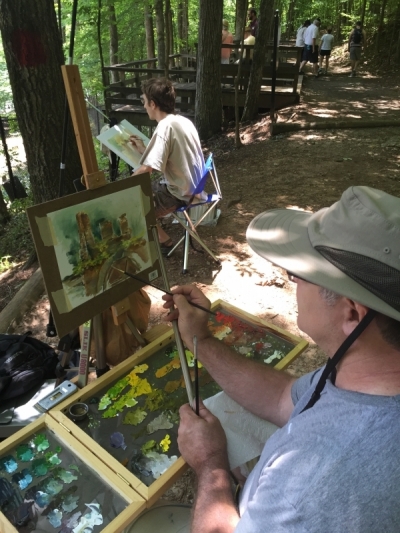
Chris diDomizio working in Oil Paint and Dylan Scott Pierce working in Watercolor
by ChrisD | Jun 25, 2015 | Blog Posts, Chris's Blog
Is Something Missing in Your Art?
In art school I was trained to paint realistically by using art rules and principles. Though I had twelve years of art classes and art painting classes eventually I felt like something was missing in my art. I started searching for more. More what? Over time I found “more” of a lot of things. I found a magic glaze medium (thank you Rubens!), an amazing Portrait palette, and various color schemes. But in spite of a fruitful career painting realistically, I QUIT painting. Never mind studying in Italy and the national awards. Never mind that several of my private commission clients were among the wealthiest in the country, hanging my work among their Rembrandt’s, Sargent’s, and Degas’. I didn’t paint. Instead I spent the next twenty-five years teaching others how to paint at my own art school, all the while lamenting, searching, examining other work, and coming up blank. I had questions and no answers. I wanted to know more.
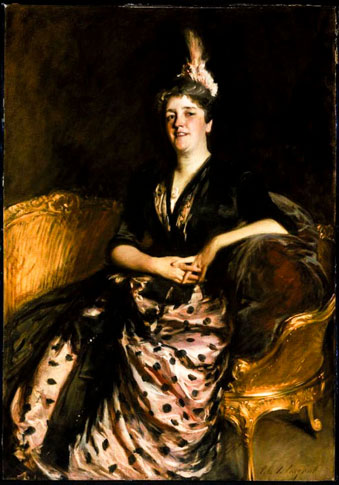
John S. Sargent “Mrs/ Boit” 1880-1882
I found the answer at the Museum of Fine Art in Boston and spent another ten years unpacking it. It started the first time I saw John S. Sargent’s “Portrait of Mrs. Boit,” (1887). I was blown away by Sargent’s command of what I understood to be the classical art rules. As my eye followed his powerful brush strokes and bold contrast, I saw how he found specific edges and how he weaved his lost and found edges into his figure ground relationships. I saw that his beautiful and intentional placement of the color’s intensity, and how he used that intensity to move my eye, was done deliberately – and I saw how it evoked a specific mood. I saw his understanding of Monet’s color. I stood for an hour and a half…seeing.
Before that day of seeing, I had viewed some of Sargent’s work at different places, but those paintings were beyond my understanding at that time and some where solid black silhouettes that lacked dimension and so I did not find Sargent to be very impressive.
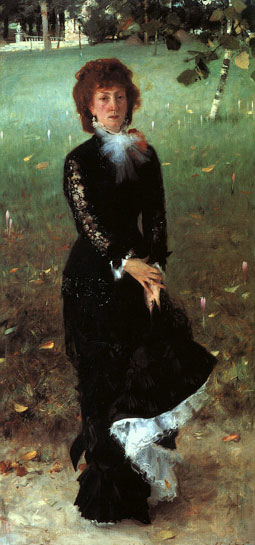
John S. Sargent “Madame Edourd Pailleron” 1879
How could he be perceived as Great? If the work is not realistic, I had thought, then it can’t be art.
But on that day in Boston, for the first time, Sargent gained my respect. He had to show me that he was better than I was for me to be able to listen to him. So I started seeing Sargent and listening to him. I saw his paint go down on the canvas as a voice, speaking something to the viewer.
John S. Sargent “Mrs.Boit” 1880-1882

John S. Sargent close up of “Mrs. Boit ” 1880-1882
Sargent wasn’t done with me yet. A few days later at the Sterling Francine Clark Art Institute, I saw “A Street in Venice 1878 ” and “A Venetian Interior 1880-1882.” Sargent painted these around the same time as the Mrs. Boit portrait 1880-1882.
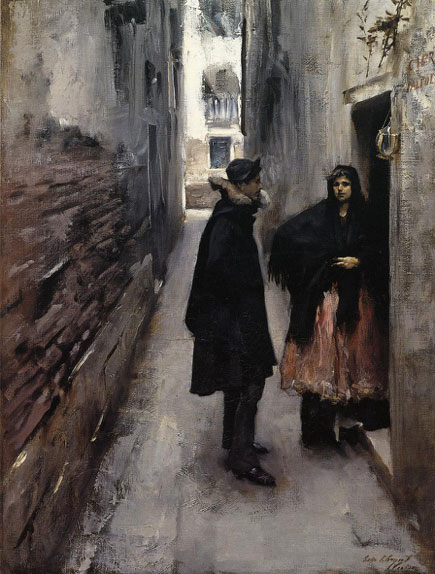
John S. Sargent “A Street in Venice” 1880-1882
Yet in this painting he left out the beautiful use of color.
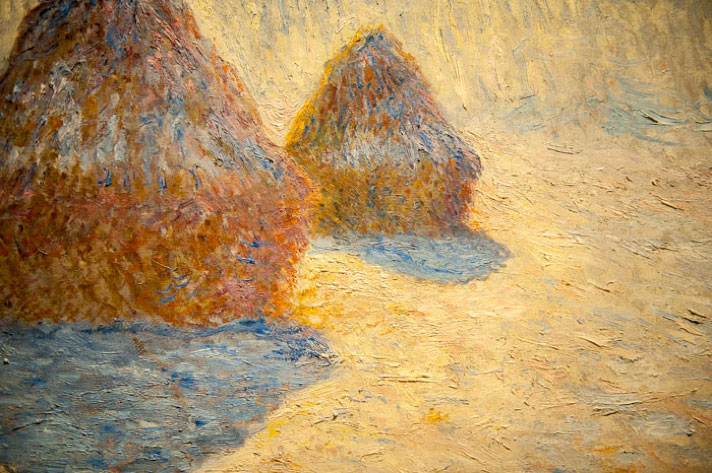
Monet Close up
He left out the figure ground relationship. And he left out most of the intentionally lost edges. Standing there I thought, why would Sargent, who was clearly better than any artist I had ever seen, leave out some of the art rules he knew and had so clearly demonstrated in another work during the same period of time?
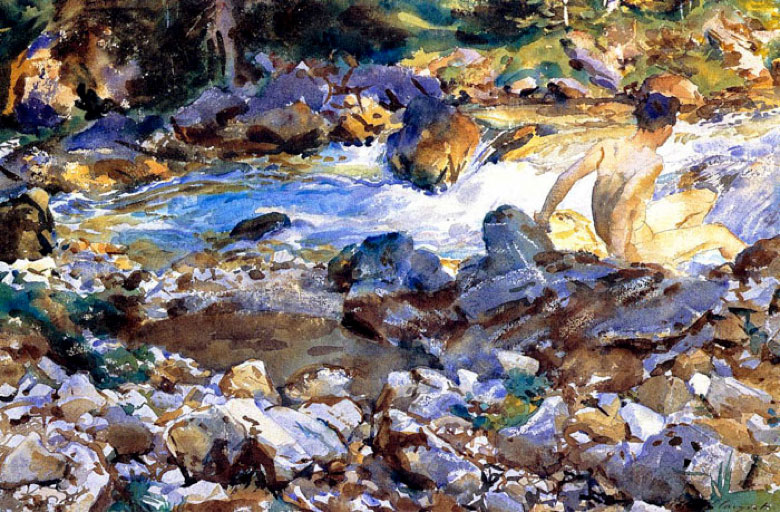
John S. Sargent Watercolor
Really? Sargent was messing with my brain. (And my way of life! I like things the way they are. I’m like a dog, I do things the same way. I want my bowl of food on the floor in the same place every day! This was uncomfortable for me).
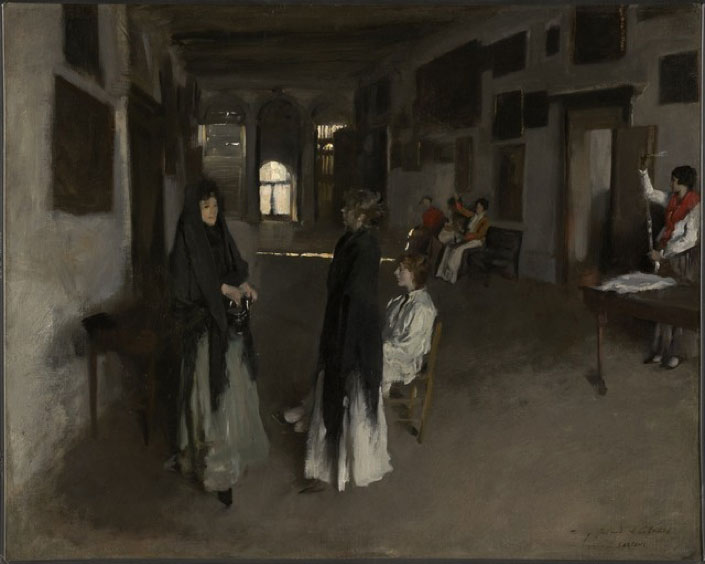
John S. Sargent “A Venetian Interior” 1880-1882
As the years have gone by, I finally see Sargent. I see that all the classical art rules, taught by the traditional art academies (including the French Academy where Sargent studied and which are no longer a part of our modern art schools) are optional. I see that they must be mastered and understood so they can be used with purpose and intent, just as Sargent has done. Sargent saw, and showed me, that the “rules” of classical art are really art TOOLS!
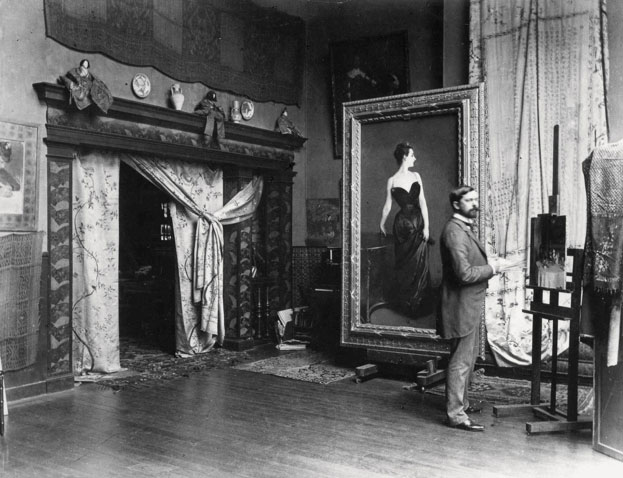
John S. Sargent in his studio in front of ” Madam X Madam Pierre Gautreau” 1883-1884
Inside my heart, soul, and spirit I connected with his way of painting, taking each stroke captive in a thought. The way he painted was purposeful and I wanted that. I recognized Sargent was equipped to master a painting through precise steps and used the Tools like no other artist. He knew how to deliver a message to the viewer, fostering an exchange between the sitter, the viewer, and himself. Sargent’s knowledge of the classical tools, and his thoughtful application of those tools to convey his specific message, was pure genius.
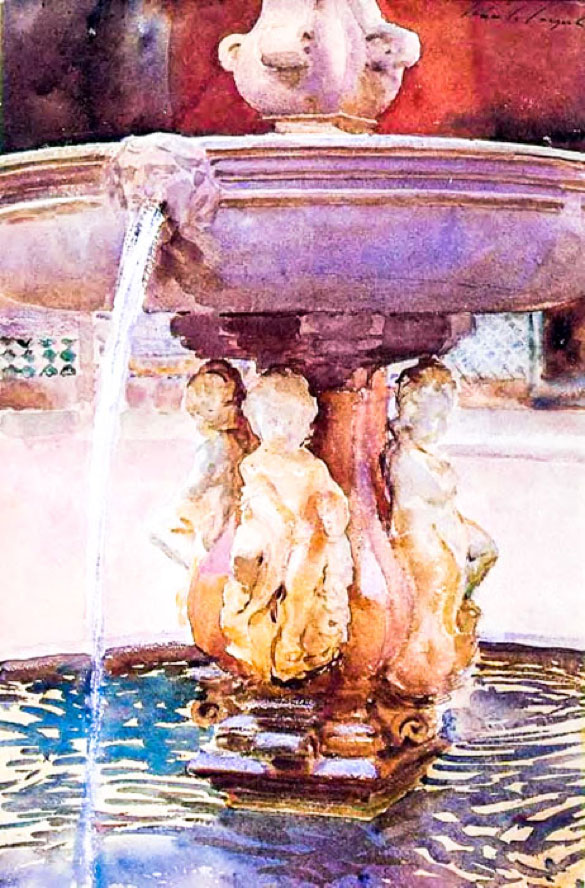
John S. Sargent watercolor
The discovery of John S. Sargent’s genius back in Boston, and my later examination of his other work — and the work of others — fueled the flame inside of me in a more directed and purposeful search for “more.” The Greats discovered things that we can employ today:
Different ways to change the intensity of a color.
Different reasons you bring attention to an area.
HOW to bring attention to an area.
The different ways to make a brush stroke, and why you should use one over another.
The list goes on.
By understanding all that was already discovered and invented, we have a wealth of understanding to pull from — and we do just that at the art school I opened in Atlanta in the early nineties. The success of my art program comes from my ability to see these connections and communicate them to others. Artists are introduced to methods of drawing and painting that can help them take control over their art and achieve beautiful outcomes on purpose!
Do you want more?
Yes, I’m painting again, and this time WITH A PURPOSE ! by using Art Toolz Today! P.S. I just found out about a lovely series of brushes while attending The Portrait Society of America this May (ah, Rosemary Co.!)
Chris diDomizio
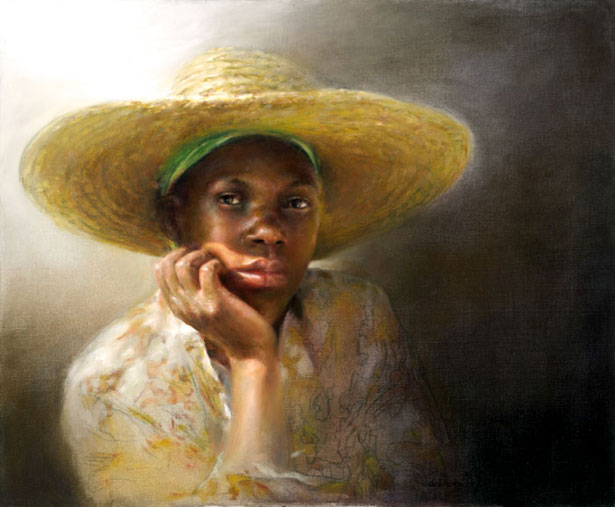
Chris diDomizio
“ The Light Awakens The Darkness”